

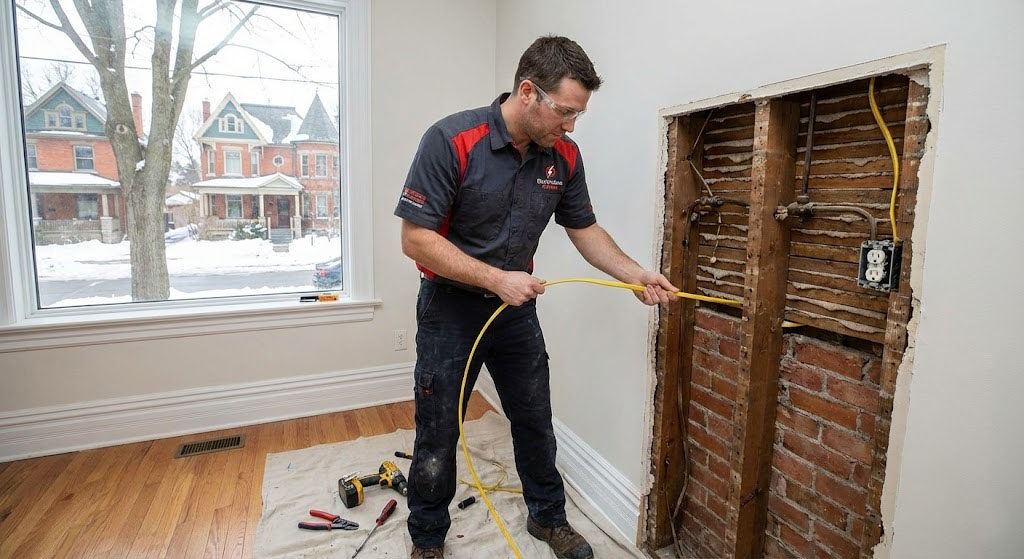
Electrical Wiring & Rewiring for Older Ottawa Homes
Ottawa’s established neighborhoods—the Glebe, Westboro, Old Ottawa South, Hintonburg, and countless others—showcase beautiful century homes and character-rich properties built when electricity was a novelty rather than necessity. These charming older homes offer architectural details, solid construction, and established lots that newer developments can’t match. But behind their plaster walls and hardwood floors, many harbor outdated electrical systems designed for an era when homes used a fraction of today’s electricity—systems that now pose serious fire hazards while struggling to support modern life.
Walk through typical older Ottawa homes and you’ll find two-prong ungrounded outlets, cloth-insulated wiring deteriorating inside walls, antiquated fuse boxes instead of circuit breakers, knob-and-tube wiring installed a century ago, and aluminum wiring from the problematic 1960s-70s era. These obsolete electrical systems weren’t designed for computers, air conditioning, electric vehicles, smart home technology, or the dozens of devices modern families use daily. The result? Fire hazards, frequent power disruptions, inability to add modern conveniences, and insurance companies refusing coverage or charging premium rates for homes with known electrical deficiencies.
At Electricians Ottawa, our licensed electricians specialize in electrical rewiring for older homes throughout Ottawa’s historic neighborhoods. We’ve rewired hundreds of heritage properties, character homes, and aging residences—modernizing electrical infrastructure while respecting architectural integrity and homeowner budgets. Our experience spans everything from complete whole-home rewiring to targeted upgrades addressing specific hazards or adding capacity for modern electrical demands.
This comprehensive guide covers everything older Ottawa homeowners need to know about electrical rewiring: identifying outdated dangerous wiring, understanding knob-and-tube and aluminum wiring hazards, planning rewiring projects, managing costs and timelines, minimizing disruption during renovations, coordinating with heritage requirements, and knowing when partial upgrades suffice versus complete rewiring.
Concerned about your older home’s electrical system? Call our rewiring specialists at (613) 319-8430 for a free comprehensive electrical assessment.
Why Older Ottawa Homes Need Electrical Rewiring
Understanding why older electrical systems fail modern requirements helps homeowners recognize when rewiring becomes necessary rather than optional.
Electrical Systems Designed for Different Era
Homes built before 1950 were wired for minimal electrical use—a few lights per room, maybe a radio, basic kitchen appliances, and little else. Total household electrical consumption rarely exceeded 3,000-5,000 watts. These homes typically received 30-60 amp electrical service, considered adequate when installed.
Compare this to modern Ottawa homes routinely drawing 15,000-30,000 watts during peak usage—electric heating, air conditioning, computers, televisions, kitchen appliances, laundry equipment, electric vehicle charging, and countless smaller devices all operating simultaneously. Forcing century-old wiring to support these demands is like asking a horse-drawn carriage to perform like a modern SUV—the fundamental infrastructure simply wasn’t built for it.
Deteriorating Insulation and Connections
Electrical wiring doesn’t last forever. Insulation deteriorates over decades, becoming brittle and cracking away from conductors. This exposes bare wires inside walls where contact with wood framing, insulation, or other wiring creates short circuits and fires. Connections loosen as materials expand and contract through decades of temperature cycling, creating high-resistance points that generate heat and eventually fail catastrophically.
Cloth-insulated wiring common in homes from the 1930s-1950s is particularly problematic. The fabric insulation literally disintegrates over time, turning to dust that provides zero electrical protection. Our electricians regularly find cloth-wired homes where insulation has completely degraded, leaving bare conductors that spark and arc whenever circuits energize.
Inadequate Grounding Protection
Older homes typically lack proper grounding—the safety system that provides paths for fault currents and protects against electrocution. Two-prong outlets indicate ungrounded electrical systems where appliance failures can energize metal housings, creating shock hazards. Modern electrical codes require grounding throughout homes, GFCI protection in bathrooms and kitchens, and AFCI protection detecting dangerous electrical arcing.
Ungrounded systems also fail to protect sensitive electronics. Without proper grounding, power surges from lightning or utility switching damage computers, smart home devices, and modern appliances containing delicate electronic controls.
Fire Hazards from Overloaded Systems
The Electrical Safety Authority reports that electrical failures cause approximately 25% of all residential fires in Ontario, with older homes disproportionately represented in these statistics. Outdated wiring creates fires through overloading—circuits designed for 600-900 watts asked to carry 1,500+ watts, insulation failure—deteriorated insulation allowing arcing and short circuits, and connection failures—loosened connections creating resistance heating that ignites surrounding materials.
These fires often smolder inside walls for hours before becoming visible, making them particularly deadly as they spread undetected while families sleep.
Identifying Dangerous Wiring in Your Ottawa Home
Several clear indicators signal that your older home needs electrical evaluation and likely rewiring.
Knob-and-Tube Wiring
Knob-and-tube wiring was standard in homes built from 1880s through 1940s. This system uses individual wires running through ceramic tubes in wall penetrations and supported by ceramic knobs attached to framing. While revolutionary when introduced, knob-and-tube presents serious hazards by modern standards.
Knob-and-tube dangers include no grounding conductor providing shock protection, cloth or rubber insulation that deteriorates over decades, inability to handle modern electrical loads safely, and incompatibility with insulation (surrounding knob-and-tube with insulation causes dangerous overheating). Many insurance companies refuse to insure homes with active knob-and-tube wiring, or charge substantial premium increases reflecting fire risks.
If your home has two-prong outlets, visible ceramic knobs in basements or attics, or was built before 1950 without documented rewiring, it likely contains knob-and-tube wiring requiring professional assessment and replacement.
Aluminum Wiring
From approximately 1965-1975, many homes were wired with aluminum instead of copper due to copper shortages and cost savings. While aluminum wiring itself isn’t inherently dangerous, it presents unique hazards at connection points where aluminum’s properties cause problems.
Aluminum expands and contracts more than copper with temperature changes, loosening connections over time. Aluminum oxidizes at connection points, creating high-resistance coatings that generate heat. These characteristics combine to create connection failures that overheat, spark, and cause fires—often at outlets, switches, and junction boxes throughout homes.
Signs your home has aluminum wiring include “AL” or “ALUMINUM” printed on cable sheathing visible in basements or attics, homes built 1965-1975 without documented copper rewiring, outlets or switches that feel warm to touch, or flickering lights when appliances start. Aluminum wiring requires special handling—either complete replacement with copper, or professional remediation using approved connection methods and materials.
Fuse Boxes Instead of Circuit Breakers
Homes with fuse boxes rather than modern circuit breaker panels typically date to pre-1960s construction. While fuses provide overcurrent protection, fuse boxes indicate electrical systems likely requiring comprehensive upgrades including outdated wiring throughout the home, inadequate electrical capacity for modern needs, and no GFCI or AFCI protection required by current codes.
Beyond safety concerns, fuse boxes are inconvenient—requiring fuse replacement rather than simple breaker resets, and tempting homeowners to install oversized fuses (extremely dangerous) when circuits blow frequently. Upgrading fuse boxes to modern circuit breaker panels often reveals extensive wiring problems requiring remediation.
Two-Prong Outlets Throughout
Two-prong outlets indicate ungrounded electrical systems lacking modern safety protection. While you can replace two-prong outlets with three-prong grounded versions, this only provides grounding if wiring includes ground conductors—which it typically doesn’t in older homes. Simply replacing outlets without proper grounding creates false sense of safety while providing no actual protection.
Proper grounding requires either complete rewiring with modern three-conductor cable, or approved alternatives like GFCI protection at circuit origins. Our electricians assess whether your two-prong outlets can be safely upgraded or require complete circuit rewiring.
Frequent Electrical Problems
If you regularly experience frequently blowing fuses or tripping breakers, flickering or dimming lights, outlets or switches that feel warm, burning smells from electrical components, or sparks when plugging in appliances, your electrical system is telling you it’s failing. Don’t ignore these warnings—they often precede serious electrical fires or complete system failures.
Complete Home Rewiring vs. Partial Upgrades
Not every older home requires complete rewiring. Understanding your options helps balance safety, functionality, and budget.
When Complete Rewiring Is Necessary
Complete home rewiring becomes necessary when knob-and-tube wiring exists throughout the home, aluminum wiring creates widespread hazards, cloth-insulated wiring has deteriorated extensively, or you’re undertaking major renovations exposing walls anyway. Complete rewiring provides modern three-conductor grounded wiring throughout, adequate circuits for modern electrical demands, GFCI and AFCI protection meeting current codes, proper electrical capacity supporting planned additions, and peace of mind from comprehensive electrical modernization.
While expensive and disruptive, complete rewiring eliminates all outdated wiring hazards rather than leaving problematic sections untouched. For homes with extensive electrical problems or those being fully renovated, complete rewiring often proves most cost-effective long-term solution.
When Partial Upgrades Suffice
Partial electrical upgrades work well when only specific areas contain problematic wiring, your home has adequate electrical capacity needing only circuit additions, or budget constraints require phased improvements over time. Partial upgrades might include replacing aluminum wiring branch circuits while keeping copper service wiring, rewiring kitchens and bathrooms adding GFCI protection, adding circuits for specific rooms or appliances, or upgrading from fuse box to circuit breaker panel.
Our electricians thoroughly assess your electrical system, identifying which areas require immediate attention and which can safely remain temporarily. This allows prioritized phased rewiring addressing critical hazards first while spreading costs over time as budget permits.
Hybrid Approaches
Many older Ottawa homes benefit from hybrid approaches combining complete rewiring in heavily-used areas with targeted upgrades elsewhere. For example, completely rewire kitchen, bathrooms, and bedrooms with modern electrical demands, upgrade aluminum wiring to copper in living areas, add dedicated circuits for air conditioning and appliances, install new electrical panel with adequate capacity, but leave less-critical areas like attics or storage spaces with existing wiring if safe.
This balanced approach prioritizes safety and functionality while managing costs and minimizing disruption. We work with homeowners to design rewiring scopes matching their priorities, timelines, and budgets.
The Electrical Rewiring Process
Understanding rewiring procedures helps homeowners prepare appropriately and know what to expect throughout projects.
Comprehensive Electrical Assessment
Rewiring begins with thorough electrical system evaluation. Our licensed electricians inspect electrical panel condition and capacity, trace existing circuits identifying wiring types and conditions, test outlets for proper grounding and polarity, evaluate wire insulation condition in accessible areas, identify code violations and safety hazards, and calculate electrical loads determining required capacity.
We provide detailed assessment reports documenting findings, prioritizing safety concerns, recommending appropriate rewiring scope, and outlining costs for complete and partial rewiring options. This information empowers informed decisions about electrical investments.
Planning and Design
Before rewiring begins, we create comprehensive electrical plans showing new circuit layouts optimized for modern use, outlet and switch locations meeting code requirements and your preferences, dedicated circuits for high-draw appliances and equipment, integration with smart home automation if desired, and coordination with any planned renovations or additions.
For heritage homes with special architectural features, we plan wire routing that preserves original details while meeting code requirements. Our experience with Ottawa’s character homes means we understand how to work respectfully within historic structures.
Permit Applications
All electrical rewiring requires Electrical Safety Authority (ESA) permits verifying code compliance. We handle all permit applications, ensuring your rewiring meets Ontario Electrical Code requirements. Permit processing typically takes 5-10 business days before work begins.
Demolition and Access
Rewiring requires access to wall cavities containing existing wiring. Depending on rewiring scope and home construction, access methods include removing sections of plaster or drywall for wire installation, fishing wires through existing wall cavities where possible, accessing from basements, attics, or crawl spaces minimizing interior disruption, or coordinating with renovation projects already exposing walls.
We minimize demolition wherever possible, using techniques developed through hundreds of older home projects. However, some wall opening is typically unavoidable for code-compliant rewiring. We coordinate demolition, rewiring, and restoration carefully to minimize disruption and costs.
New Wiring Installation
Our electricians install modern electrical systems meeting current codes including copper wiring with proper insulation throughout, three-conductor cable providing grounding protection, adequate circuits distributing loads safely, GFCI protection in bathrooms, kitchens, and outdoor areas, AFCI protection on bedroom and living area circuits, and proper junction boxes and connections for long-term reliability.
We route wiring through framing following code requirements for protection and support, keeping low-voltage wiring (data, phone) separated from power wiring to prevent interference, labeling all circuits clearly for future service, and coordinating with insulation contractors if upgrading insulation during rewiring.
Electrical Panel Installation or Upgrade
Most rewiring projects include electrical panel upgrades from outdated fuse boxes or undersized panels to modern 200-amp circuit breaker panels. Our panel upgrade services integrate seamlessly with rewiring projects, providing comprehensive electrical modernization in coordinated timelines. We coordinate with Hydro Ottawa for temporary disconnection during panel replacement and reconnection after ESA inspection approval.
Testing and Inspection
After rewiring completion, we thoroughly test all circuits verifying proper voltage and grounding, confirm GFCI and AFCI protection function correctly, test all outlets, switches, and fixtures, verify proper circuit labeling and documentation, and identify any issues before ESA inspection.
ESA inspectors examine our work verifying code compliance and safe installation. After inspection approval, ESA issues Certificate of Acceptance confirming your electrical system meets Ontario safety standards. This certification provides peace of mind while satisfying insurance company requirements.
Wall Repair and Restoration
After electrical work passes inspection, wall repairs restore homes to pre-rewiring condition or better. We coordinate with trusted drywall contractors, plasterers, and painters who specialize in heritage home restoration, ensuring repairs match original finishes. For homeowners managing their own repairs, we leave wall openings clean and accessible for contractor access.
Electrical Rewiring Costs in Ottawa (2026)
Rewiring costs vary significantly based on home size, wiring complexity, access challenges, and scope of work.
Complete Home Rewiring Costs
Full electrical rewiring for typical Ottawa homes generally costs $8,000-$25,000+ depending on multiple factors. Small homes (under 1,200 sq ft) with straightforward layouts typically cost $8,000-$12,000 including complete rewiring and panel upgrade. Medium homes (1,200-2,000 sq ft) generally cost $12,000-$18,000 for comprehensive rewiring with modern panel. Large homes (2,000-3,000+ sq ft) or complex layouts typically cost $18,000-$25,000+ for complete electrical modernization.
Additional cost factors include plaster walls requiring specialized repair (more expensive than drywall), heritage home considerations requiring extra care preserving original features, extensive aluminum wiring remediation, accessibility challenges in multi-story homes, and integration with smart home systems or specialty equipment.
Partial Rewiring and Circuit Addition Costs
Targeted electrical upgrades cost less than complete rewiring while addressing specific needs. Kitchen rewiring with dedicated appliance circuits typically costs $2,500-$5,000. Bathroom rewiring adding GFCI protection costs $800-$1,500 per bathroom. Aluminum wiring circuit replacement averages $150-$300 per circuit. Single dedicated circuit additions for appliances or equipment cost $400-$800 installed.
Electrical panel upgrades independent of rewiring typically cost $2,500-$4,500 as discussed in our panel upgrade guide.
Cost vs. Value Considerations
While rewiring represents significant investment, consider the value it provides. Insurance companies often refuse coverage for homes with knob-and-tube or aluminum wiring, or charge premiums of $500-$2,000+ annually. Over a decade, insurance savings alone can offset substantial rewiring costs. Fire prevention through safe modern wiring protects your largest investment—your home—along with irreplaceable possessions and most importantly, your family’s safety.
Rewiring increases home values significantly. Real estate appraisers and homebuyers recognize modern electrical systems as major selling points. Updated electrical often returns 100% of investment costs when selling, while outdated wiring actively deters buyers and reduces offers. For homeowners planning to sell within 5-10 years, rewiring before listing maximizes sale prices and speeds sales.
Financing Electrical Upgrades
Several financing options help manage rewiring costs including home equity lines of credit offering competitive rates for home improvements, personal loans through banks and credit unions, contractor payment plans for qualified homeowners, and provincial or municipal energy efficiency programs sometimes offering rebates for electrical upgrades paired with insulation improvements.
We work with homeowners to phase rewiring over multiple years when budget constraints require staged approaches, prioritizing critical safety hazards first while planning future stages.
Minimizing Disruption During Rewiring
Electrical rewiring creates disruption, but careful planning and experienced contractors minimize inconvenience.
Phased Rewiring Approaches
Instead of rewiring entire homes simultaneously, we can work room-by-room or floor-by-floor, allowing families to remain in homes during projects. We complete one area fully before moving to next, leaving other areas functional. This extends project timelines but reduces simultaneous disruption and spreads costs over time.
Coordinating with Renovations
If planning renovations, coordinate electrical rewiring with construction schedules. Walls opened for renovations provide easy electrical access without additional demolition. We work closely with general contractors, architects, and homeowners to integrate electrical work seamlessly into renovation timelines, minimizing redundant demolition and restoration while ensuring electrical infrastructure supports renovation plans.
Temporary Power Solutions
During rewiring, we maintain temporary power to critical areas wherever possible, keeping refrigerators, heating systems, and essential lighting operational while work progresses. For projects requiring complete power shutdown, we minimize outage duration through efficient work practices and careful planning.
Rewiring Heritage and Character Homes
Ottawa’s heritage homes require special consideration during electrical upgrades, balancing modern safety with architectural preservation.
Heritage Property Considerations
Designated heritage properties may require heritage permit approvals for electrical work affecting building exteriors or significant interior features. We work with heritage planners to design rewiring approaches that preserve architectural integrity while meeting electrical codes. Our experience includes routing wiring behind original trim and moldings preserving decorative details, maintaining original plaster wherever possible through minimal-access rewiring techniques, preserving original fixtures while upgrading wiring safely, and installing modern panels in locations that minimize visual impact.
Working with Original Materials
Character homes feature original materials deserving preservation—plaster walls, decorative trim, hardwood floors. We use specialized techniques protecting these features including careful exploratory openings locating wiring routes before major demolition, protecting floors and finishes during work, coordinating with restoration craftspeople who specialize in heritage homes, and documenting original features before work for accurate restoration.
Additional Electrical Upgrades to Consider
When rewiring older homes, consider complementary electrical improvements maximizing investment value.
Smart Home Integration
Modern rewiring provides perfect opportunities to integrate smart home technology—smart switches and dimmers, automated lighting controls, smart thermostats optimizing energy efficiency, security system wiring, and structured low-voltage cabling for data, phone, and entertainment systems. Planning these integrations during rewiring is far easier and less expensive than retrofitting later.
Dedicated Circuits for Modern Demands
Include dedicated circuits supporting contemporary lifestyles including electric vehicle Level 2 charging stations, home office equipment requiring reliable clean power, air conditioning systems, kitchen appliances (refrigerator, microwave, dishwasher), laundry equipment, and workshop or hobby equipment. Dedicated circuits prevent overloads while ensuring reliable operation.
Whole-Home Surge Protection
Modern electronics benefit from whole-home surge protection installed at electrical panels. These devices protect all household equipment from lightning strikes and utility power surges. Adding surge protection during panel upgrades costs only $300-$600 while protecting thousands of dollars of electronics, appliances, and smart home devices.
Generator Compatibility
If considering backup generator installation, ensure your rewired electrical system accommodates generator integration with appropriate transfer switch locations, adequate panel space for generator circuits, and generator-compatible wiring practices. Planning generator compatibility during rewiring is far simpler than retrofitting later.
Why Choose Electricians Ottawa for Home Rewiring
Rewiring older homes requires specialized expertise beyond standard electrical work—experience our team has developed through hundreds of Ottawa heritage home projects.
Heritage Home Expertise
We specialize in older Ottawa homes, understanding construction methods, materials, and challenges that differentiate character homes from modern construction. Our electricians know how to work respectfully within historic structures, preserving architectural integrity while modernizing electrical systems safely. We’ve rewired homes in every Ottawa neighborhood from the Glebe to Hintonburg, Westboro to Old Ottawa South and beyond.
Comprehensive Electrical Services
From initial assessments through design, permitting, installation, inspection, and restoration coordination, we handle every aspect of rewiring projects. Our comprehensive services include complete home rewiring and partial upgrades, electrical panel replacements, knob-and-tube removal and replacement, aluminum wiring remediation, code violation corrections, and integration with renovations. You work with one experienced team throughout your project, ensuring accountability and seamless coordination.
Licensed and Insured Professionals
All our electricians are fully licensed and ESA-certified, with extensive experience in residential rewiring. We follow Ontario Electrical Code requirements precisely, ensuring installations meet safety standards and pass ESA inspections consistently. Our work is guaranteed and warrantied, providing long-term confidence in your investment. We also offer 24/7 emergency electrical services if urgent problems arise with your electrical system.
Transparent Communication and Pricing
We provide detailed assessments explaining electrical problems in clear language homeowners understand, realistic timelines and disruption expectations, itemized quotes outlining all costs before work begins, and regular project updates keeping you informed throughout rewiring. No surprises, no hidden fees—just honest professional service you can trust.
Modernize Your Ottawa Home’s Electrical System
Your older Ottawa home offers character, quality, and charm that new construction can’t match. Don’t let outdated dangerous electrical systems diminish these advantages or compromise your family’s safety. Professional electrical rewiring modernizes your electrical infrastructure while preserving everything you love about your character home—providing safety, reliability, and capacity for modern living.
Whether you need complete home rewiring, targeted aluminum or knob-and-tube wiring replacement, or electrical capacity upgrades supporting modern demands, our experienced team creates solutions perfectly suited to your home’s unique characteristics and your specific needs.
Protect your heritage home investment. Contact Electricians Ottawa today:
- Call or text: (613) 319-8430
- Request electrical assessment: Contact Electricians Ottawa
- Rewiring services: Electrical Wiring & Rewiring
- Panel upgrades: Electrical Panel Services
We also provide comprehensive residential electrical services including smart home installation, backup generator systems, EV charger installation, and all electrical needs throughout Ottawa’s heritage neighborhoods and beyond.
Invest in safety and modern convenience. Trust Electricians Ottawa for professional electrical rewiring that respects your home’s heritage while protecting your family’s future.